
ELFA CapEx Finance Index: February 2026
New Equipment Demand Remained Elevated
March 31, 2026 8:00 am EST
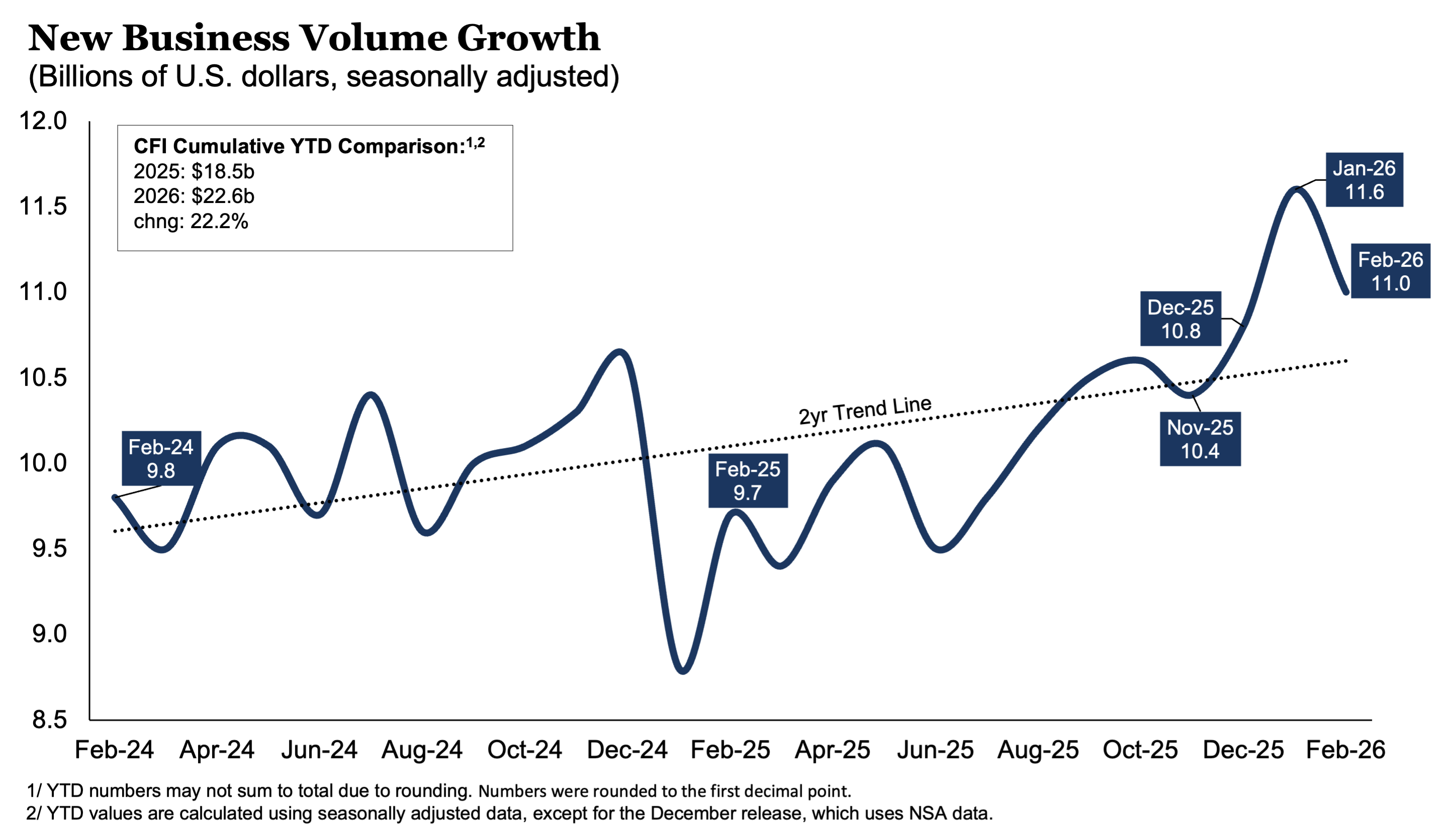
The latest CapEx Finance Index (CFI), released today by the Equipment Leasing & Finance Association (ELFA), shows that equipment demand stayed strong through the middle of the first quarter. New business volumes (NBV) in January and February saw record-breaking growth, fueled by a surge in activity among independent providers. With stable financial conditions, the industry is well-positioned even if the Fed continues to hold rates at current levels.
- Total NBV among surveyed ELFA member companies was $11.0 billion on a seasonally adjusted basis.
- Year-to-date NBV rose by 22.2% relative to the same period in 2025.
- Year-over-year, NBV increased by 14.2% on a non-seasonally adjusted basis.
“The February CFI report is a clear signal that equipment demand isn’t slowing down,” said Leigh Lytle, President and CEO at ELFA. “Every industry segment saw healthy growth over the last year, with independent providers leading the way with another surge in February. This survey was conducted before the conflict in Iran and the March FOMC meeting, and those could cause more bumps in the first half. However, financial conditions and credit approvals remain strong. These are signs that the sector can withstand additional shocks.”
Equipment demand remained strong. Total NBV grew by $11.0 billion in February. While that is a 4.7% decline from January, which was an all-time high, it’s only the second time new activity has ever hit $11.0 billion. Year-to-date activity in January and February grew at the second-fastest pace ever, and new volume growth adjusted for inflation continued to rise. The total new volume series tracks the amount of new activity added by banks, independents, and captives in a given month.
Small ticket volume growth tracks broader economic conditions and is an important barometer of aggregate demand for equipment. Small ticket deals grew by $4.4 billion, down 14.7% from January, but were still above their 12-month trailing average of $3.5 billion.
Activity at banks and independents rose by 11.7% and 12.7% from the prior month, respectively. New deals at captives dropped by 17.5% but were in line with their average over the last year. Post-pandemic activity continues to be driven by deals at captives and independents.
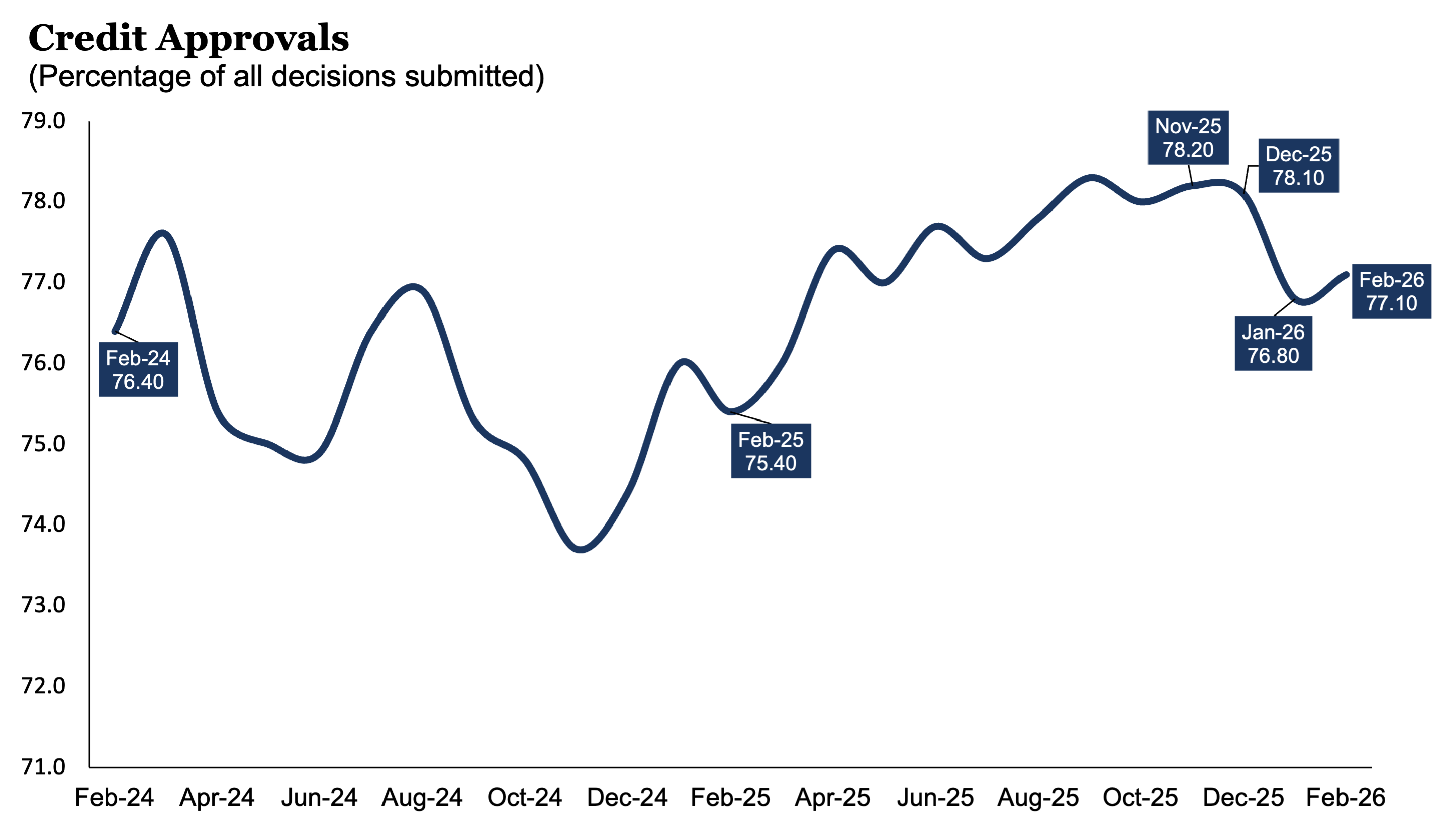
The overall credit approval rate rose for the first time in three months. The industry-wide average increased to 77.1% in February, up 0.3 percentage points from the prior month. Over the last year, the credit approval rate was up 1.7 percentage points. The average small ticket approval rate dropped for a third consecutive month, to 79.2% in February. The rates at banks and independents rose by 0.9 and 1.9 percentage points, respectively. The approval rate at captives dropped by 2.5 percentage points.
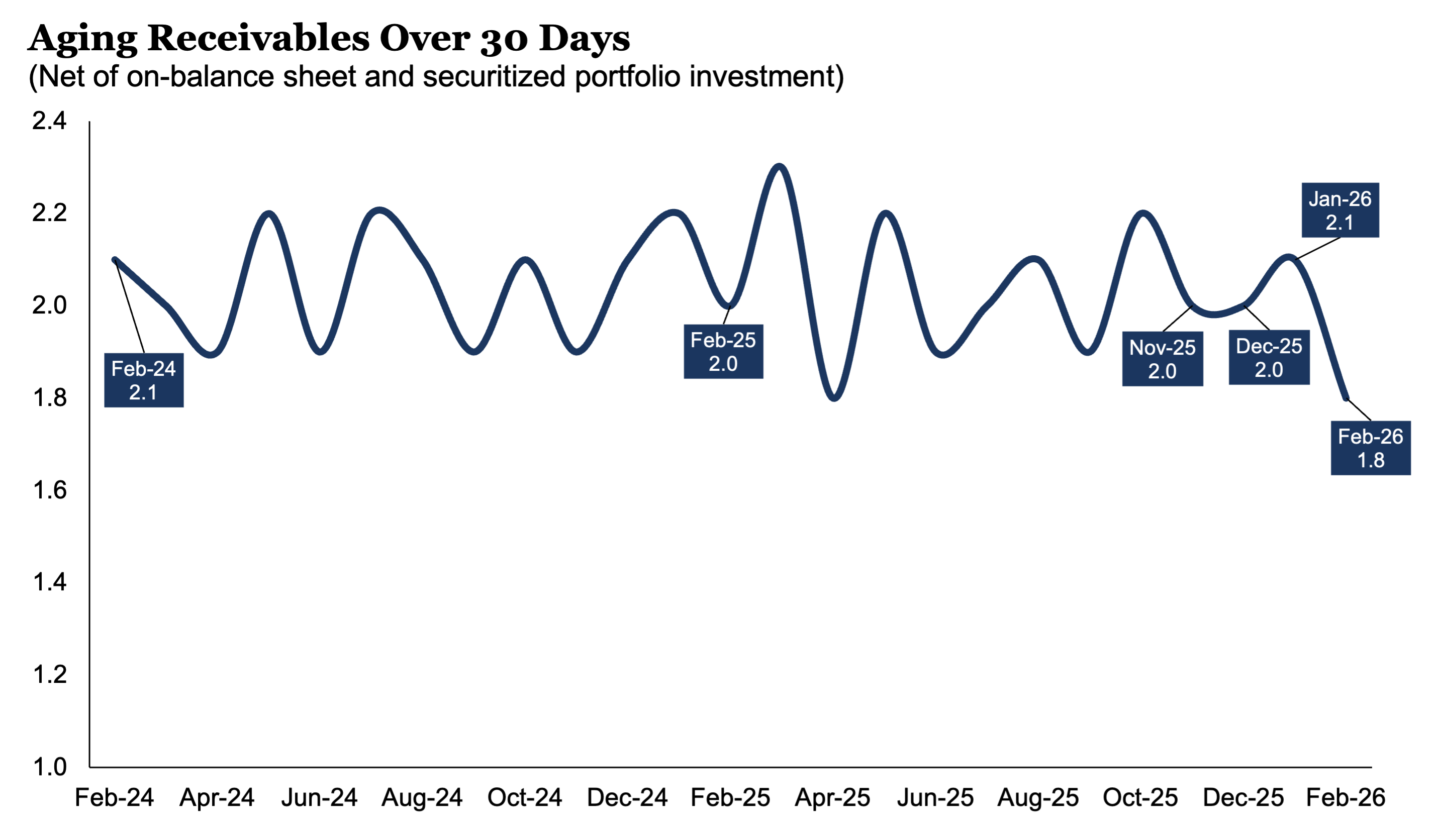
The delinquency rate dropped to its lowest point in years, while the loss rate rose. The overall delinquency rate declined to 1.8% in February, its lowest point in 32 months. The delinquency rates at banks, captives, and independents all fell and are either flat or down over the last year.
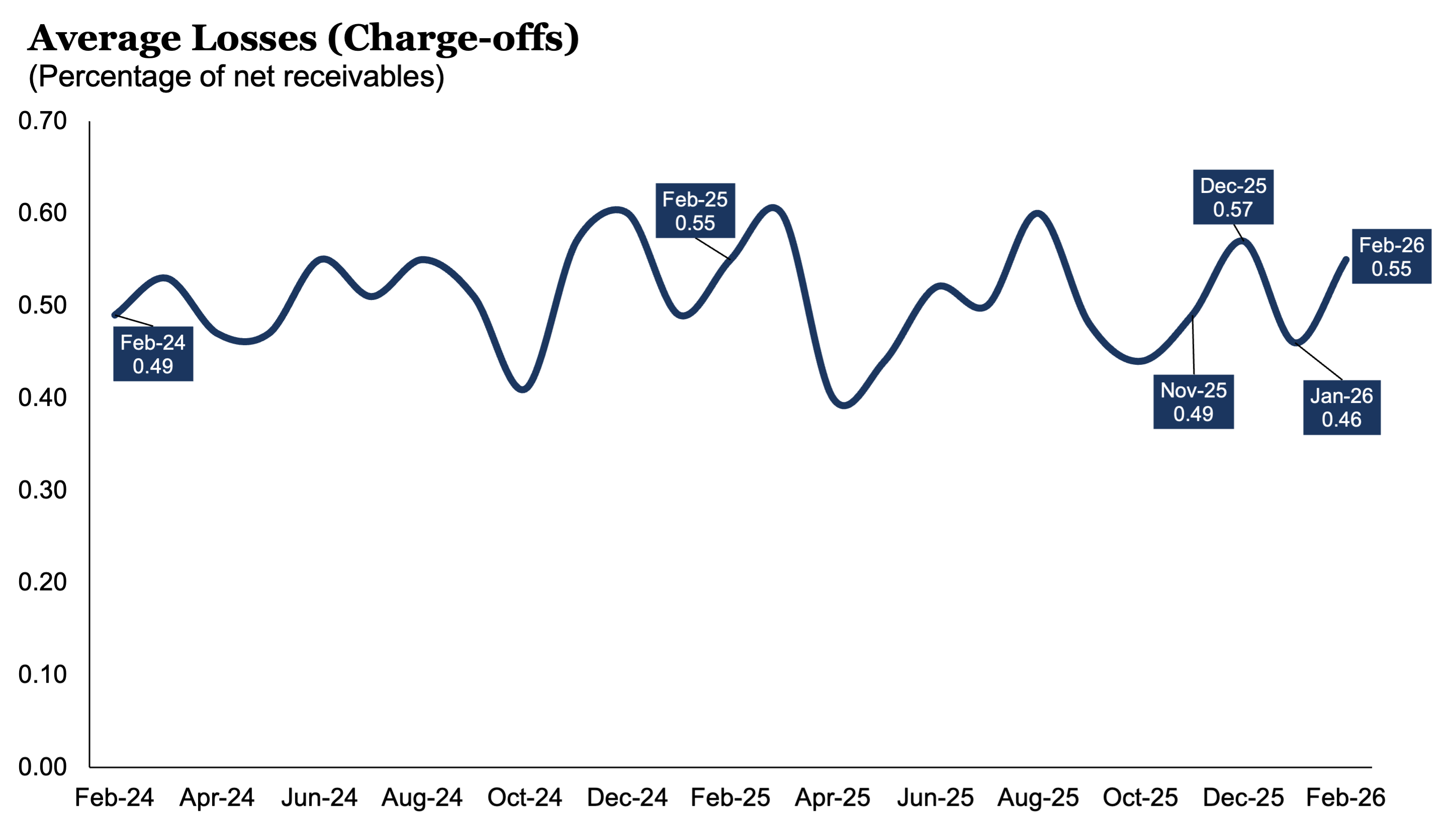
The overall loss rate increased by 0.09 percentage points to 0.55% in February, offsetting the 0.1 percentage point decline in January. The average loss rate for small ticket deals also rose to 0.68% and remained near its two-year high. The average loss rate for all three industry groups increased from the prior month.
Industry Confidence
The Monthly Confidence Index tracks the sentiment of executives in the industry. The index in March is 61.0, a decrease from 67.6 in February, but within the range of index levels over the past nine months.
“The commercial equipment finance industry is starting 2026 off well,” said David Normandin, CLFP, President and Chief Executive Officer, Wintrust Specialty Finance. “While there is abundant uncertainty, our customers continue to invest in capital equipment. We remain steady in our commitment to serve the U.S. business community and are finding ways to meet their needs and deliver value. I expect that 2026 will have challenges to overcome and opportunities to execute successfully that will enable continued growth.”
Technical Note
New business volume data are concurrently seasonally adjusted each month to capture the latest seasonal patterns. Data in previous months and years may change due to updated seasonal factors.