
| 2024 ELFF Projections | 2.7% GDP Growth* *see explanation on p. 12 | 4.4% Equip. & Software Investment Growth | 2.6% Headline CPI* *end-of-year forecast | -25bp Δ in Fed Funds Rate from Current Range |
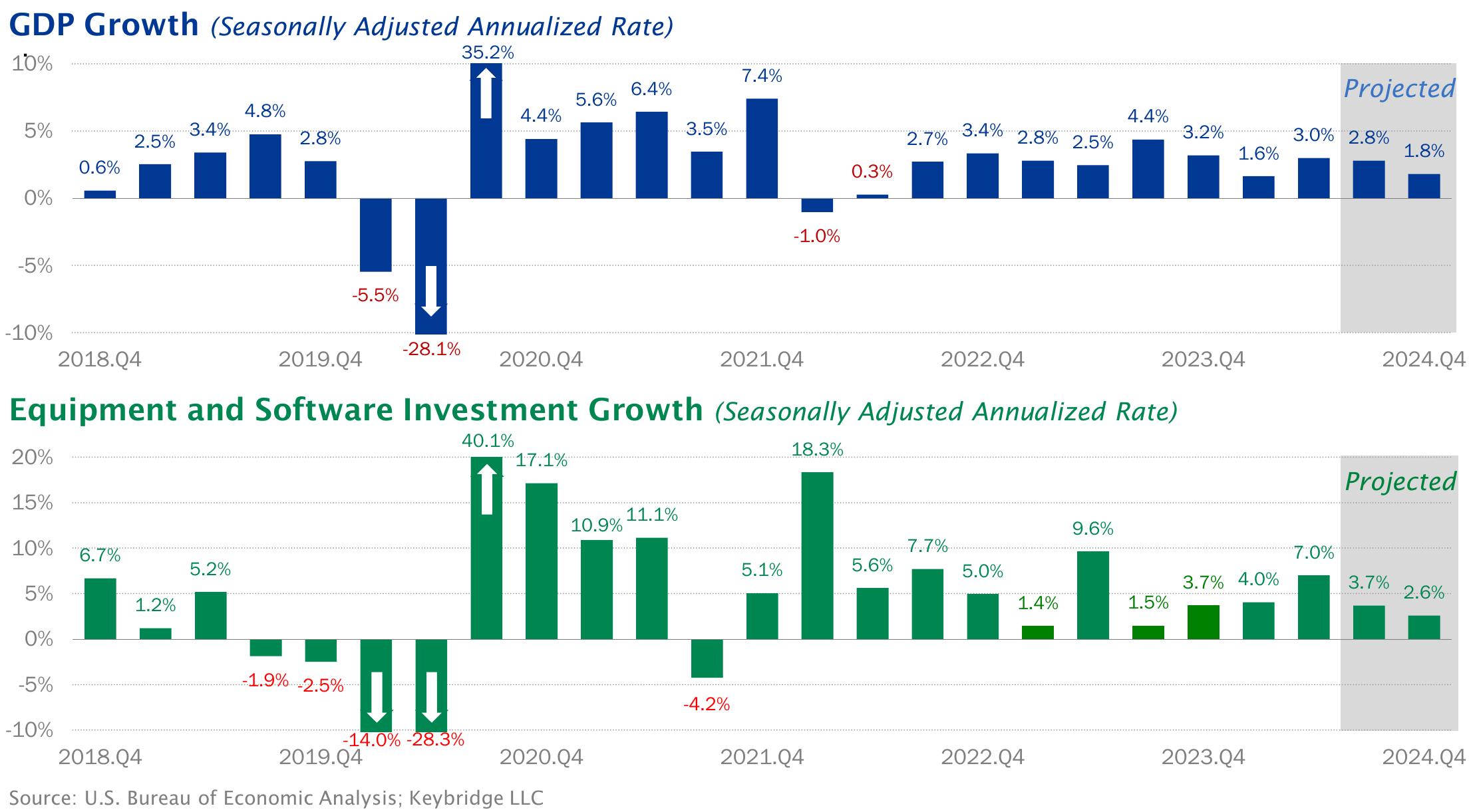
Equipment and Software Investment: After three consecutive weak quarters, investment bounced back in Q2, expanding by a solid 7% annualized rate. Aircraft investment was primarily responsible for the improvement, along with information processing equipment. Industrial equipment contracted modestly.
Momentum Monitor: Growth in the second quarter was positive in six verticals, with Aircraft leading the way followed by Computers, Railroad Equipment, and Trucks. Contracting verticals include Ships & Boats and Agriculture. Overall, near-term investment growth is expected to be modest but should improve in 2025.
Manufacturing: The manufacturing sector continues to struggle. Shipments and new orders of core capital goods are sluggish, industrial production is soft, the ISM Purchasing Managers Index for Manufacturing has contracted for 22 out of the last 23 months, and manufacturing employment has fallen by 50,000 workers in 2024 (including 34,000 in the last two months).
Small Businesses: Business conditions are generally favorable, but recent shifts in the labor market, rising geopolitical tension, and the 2024 election have led to a rapid rise in uncertainty and prompted small business owners to adopt a more cautious posture. This may depress investment activity in the near term, but if inflation remains in check and the Fed gradually cuts rates as expected, activity should pick up again in early 2025.
Fed Policy: The Fed is characterizing its decision to cut rates by 50 bps rather than 25 bps as a “recalibration” rather than an emergency reaction to a weakening labor market. The Fed maintains that rate cuts are not intrinsically linked to a looming recession, but rather that a controlled easing of monetary policy, if properly timed and calibrated, can help keep the economy on track.
U.S. Economy: The U.S. economy continues to expand at a solid clip. Growth in the second quarter was stronger than expected, and investment in equipment and software was particularly strong. However, softer-than-anticipated job growth and rising unemployment over the summer raised questions about the long-term sustainability of the current economic expansion. Still: layoffs remain low by historical standards, real wage growth is healthy, inflation is modestly elevated but largely contained, and the prospect for additional rate cuts later this year and next year should provide a boost to both hiring and investment. Whoever prevails in the Presidential election will inherit an economy that is poised for growth in 2025.