

Data Center Growth Outduels the Iran Conflict
WHAT’S AHEAD FOR THE EQUIPMENT FINANCE INDUSTRY:
- Demand for equipment will remain strong. As evidenced by the surge in economy-wide investment in Q1, demand for data centers and other information-processing equipment will continue to soften the blow from a slowdown in household spending.
- Asset values will benefit from secondary inflation effects. The conflict’s inflationary impact will continue through at least July. The initial energy price shock will lead to a less severe, but more prolonged effect on core goods prices. Elevated material prices and continued demand for equipment, particularly construction and information processing equipment, will bolster asset prices.
- Expect higher yields at the longer end. Financial markets are repricing the new, more volatile world. Risk premia in longer-duration yields continue to grow. The upward risks to 7- and 10-year Treasury yields outweigh the downward risks, particularly with a secondary inflation surge on the horizon and the potential for another deficit-widening fiscal bill later this year.
- Cautious Fed won’t weigh on conditions in the equipment finance industry. With inflation rising, confusing signals from the labor market persisting, and a potential leadership transition at the Fed, policymakers are likely to err on the side of less is more when adjusting the federal funds rate. And the next move could very well be a rate increase, should inflation breach 4.00% on a 12-month basis. Even in that scenario, we’d expect equipment demand to moderate somewhat but remain above levels experienced in the second half of the 2010s.
ECONOMIC OUTLOOK:
The length of the conflict will determine the economy’s fate. The conflict in Iran is the biggest and most impactful storyline of early 2026, with the potential to upend the Fed’s plans for a soft landing. If the conflict ends next month, the economic impact will be a surge in inflation and a hit to consumer spending, but the economy will emerge with only bruises. However, should it continue into the late summer, the risk of a serious slowdown in economic activity rises meaningfully.
Households are facing the worst inflationary environment in years. Real incomes are likely to erode further in the middle of 2026, prompting an additional pullback in consumer spending. Net exports are also likely to slide as the effects of the conflict are felt acutely in some of our biggest trading partners, slowing their economies and reducing demand for American exports. Government spending will remain weak. However, economy-wide investment is likely to remain healthy due to strong demand for equipment.
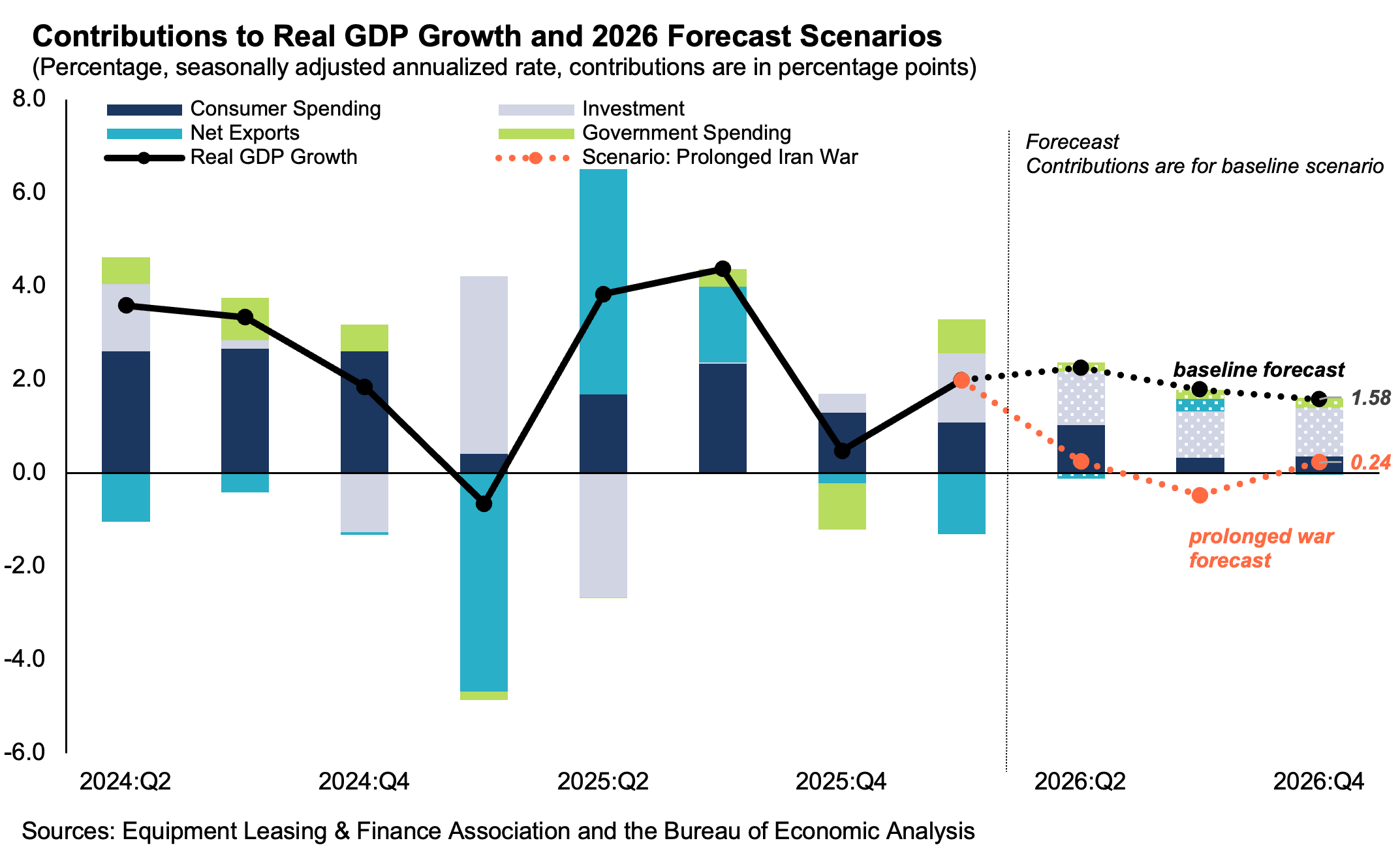
Equipment demand will grow at a healthy clip in 2026. Data through the first quarter showed that new equipment financing deals hit an all-time high. However, beneath the surface, executives are growing uncomfortable with geopolitical tensions, which could hold back spending later this year if conditions in the Middle East remain tense. That said, equity markets continue to rebound and push to new highs, and corporate profits as a percentage of GDP hover near record levels. Those factors will provide insulation for equipment demand over the near term.
The economy may not need to add jobs to stay healthy. The dwindling supply of labor, both now and into the future, remains the most significant story in the labor market. Restrictive immigration policy and an aging population are putting downward pressure on both the labor force participation rate and employment growth. A shortage of potential workers will upend traditional labor market dynamics, as the economy may be able to shed jobs in a given month without a material change in the unemployment rate. A labor market where employment data is unreliable will make the Fed’s job of balancing the two halves of the mandate, stable prices and full employment, more difficult, raising the risk of a policy mistake if labor market deterioration is obscured by unreliable data signals.
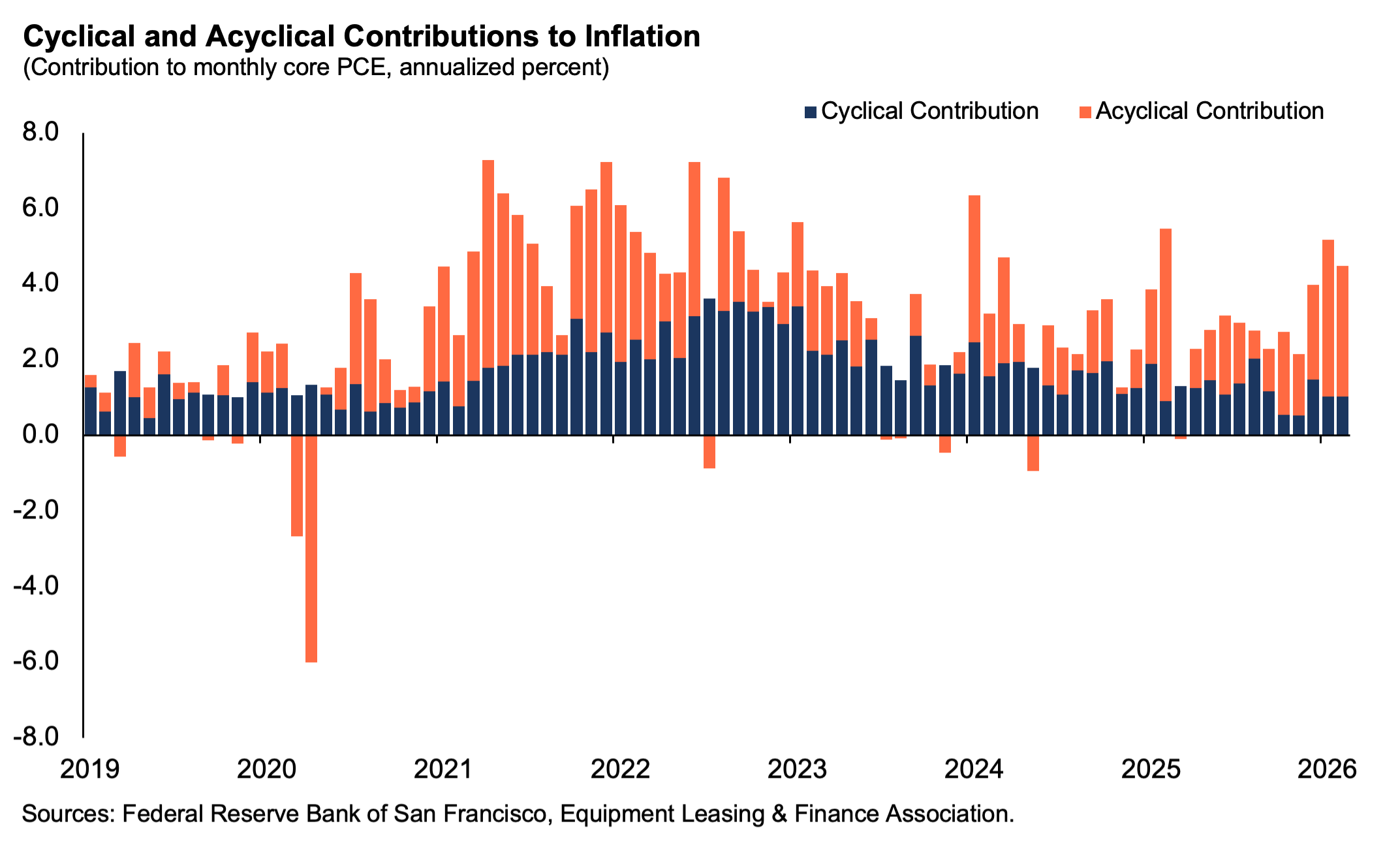
This is not the kind of inflation the Fed can control. There was an inflation problem before the conflict in Iran. From December through February, the pace of price growth looked eerily similar to the early days of the 2021-2022 inflation surge. The conflict will exacerbate core inflation in the months ahead as the effects filter through to other parts of the economy. Ultimately, should the conflict end by early summer, it will be remembered as a textbook one-time energy shock rather than another period of surging prices.
The Fed’s ability to control inflation may be waning. Inflationary pressures can be broken down into a cyclical component – prices that respond to changes in the economic cycle or interest rates – and an acyclical component, which is predominantly determined by factors outside the economic cycle and the Fed's influence. The rise of acyclical inflation, as shown in the chart, suggests the Fed may have little influence over the current inflationary environment. Policymakers face a world where they will either have to commit to a few more years of above-target inflation or destroy enough demand to offset acyclical inflationary pressures, thereby raising the risk of a recession.
Expect more increases to long-duration yields. Investors will want to be compensated for the likely increase in future inflation and continued uncertainty in geopolitical and political events. Those factors translate into upward risk to longer-duration yields, which will raise some borrowing costs, slowing economic activity.


