

AI-Related Investment to Remain Strong as Consumer Spending Moderates
WHAT’S AHEAD FOR THE EQUIPMENT FINANCE INDUSTRY:
- Equipment demand is on track for a record year, and it is not just AI. New business volume in the CapEx Finance Index (CFI) could reach a record $141 billion in 2026, up almost 18% from 2025. The strength is showing across the economy: business equipment investment has grown about 17% at an annual rate so far this year, and shipments of core capital goods are accelerating. AI hardware leads, but industrial equipment investment rose about 25% in Q3. All of this is happening despite tariffs and elevated borrowing costs.
- The consumer is squeezed, and that bears watching. Consumers have carried growth for two years, but challenges are stacking up, and household spending is likely to cool in 2027. Health care costs are rising; inflation is growing faster than wages, so households are losing purchasing power; college loan forbearance has ended; and the positive wealth effects from high stock prices are at risk amid the recent increase in equity market volatility.
- AI is a financing opportunity, even as the majority of it is self-funded. Investment in computers and peripheral equipment nearly doubled between 2023 and 2025, but the share financed fell from 67% to 47%. Financed volume still rose 32%, and at this year’s pace, could reach about $207 billion in 2026.
- Borrowing costs are likely to stay elevated. Our baseline has the 10-year Treasury yield drifting to about 5.1% by late 2027, and the Fed is divided, with two officials voting to raise rates in October. Anyone counting on a lower cost of funds in 2027 should plan for the alternative.
- An AI slowdown is a potential 2027 challenge. The selloff in AI stocks after the midterm elections previewed our downside scenario: lower stock prices, lower long-term yields, and, eventually, softer consumer spending. With most of the year’s data in hand, 2026 is largely locked in, but the risk of a slowdown creeping up early next year is rising.
ECONOMIC OUTLOOK:
Consumers have been the unsung heroes of growth, but the cushion is thinning. Real consumer spending grew 3.8% at an annual rate in both Q2 and Q3, well above the roughly 2.4% pace of 2018 and 2019, despite consumer sentiment reaching near record lows. Real wage growth has been negative since Q2, the first time since 2022. Households have also become more concerned about missing debt payments. The average reported chance of missing a minimum debt payment is up 1.2 percentage points since early 2023. Higher asset prices, such as homes and equities, have supported spending, which leaves the economy exposed to stock market swings or a downturn in home prices.
AI investment should still offset weaker consumer demand next year, though its momentum faces new tests. Business equipment investment has grown about 17% at an annual rate so far this year. Consumers still contributed the lion’s share of growth in the third quarter, but equipment investment was the third-largest driver, rising 20.9%. Strong imports are another sign of robust AI demand, even if they artificially depress official growth numbers. Consumer spending looks poised to slow in 2027, and the post-election movement in equities could be a canary in the coal mine for less AI-growth optimism ahead. Together, those would present the biggest challenges to the U.S. economy since the post-pandemic inflation surge.
Financing demand is healthy and accelerating. The good news is that investment data has so far been very strong. Core capital goods shipments have grown more than 11% year over year every month from June through September, up from an average of 6.6% in the first five months of the year and the fastest pace since early 2022. Some of the gain reflects tariff-driven price increases, but real growth is still solid.
AI is changing how equipment gets financed. The largest AI buyers have leaned on cash flow and bond markets, so about three-quarters of the increase in computer investment since 2023 was funded without equipment financing. For the industry, a smaller share of a much bigger pie is still more business.
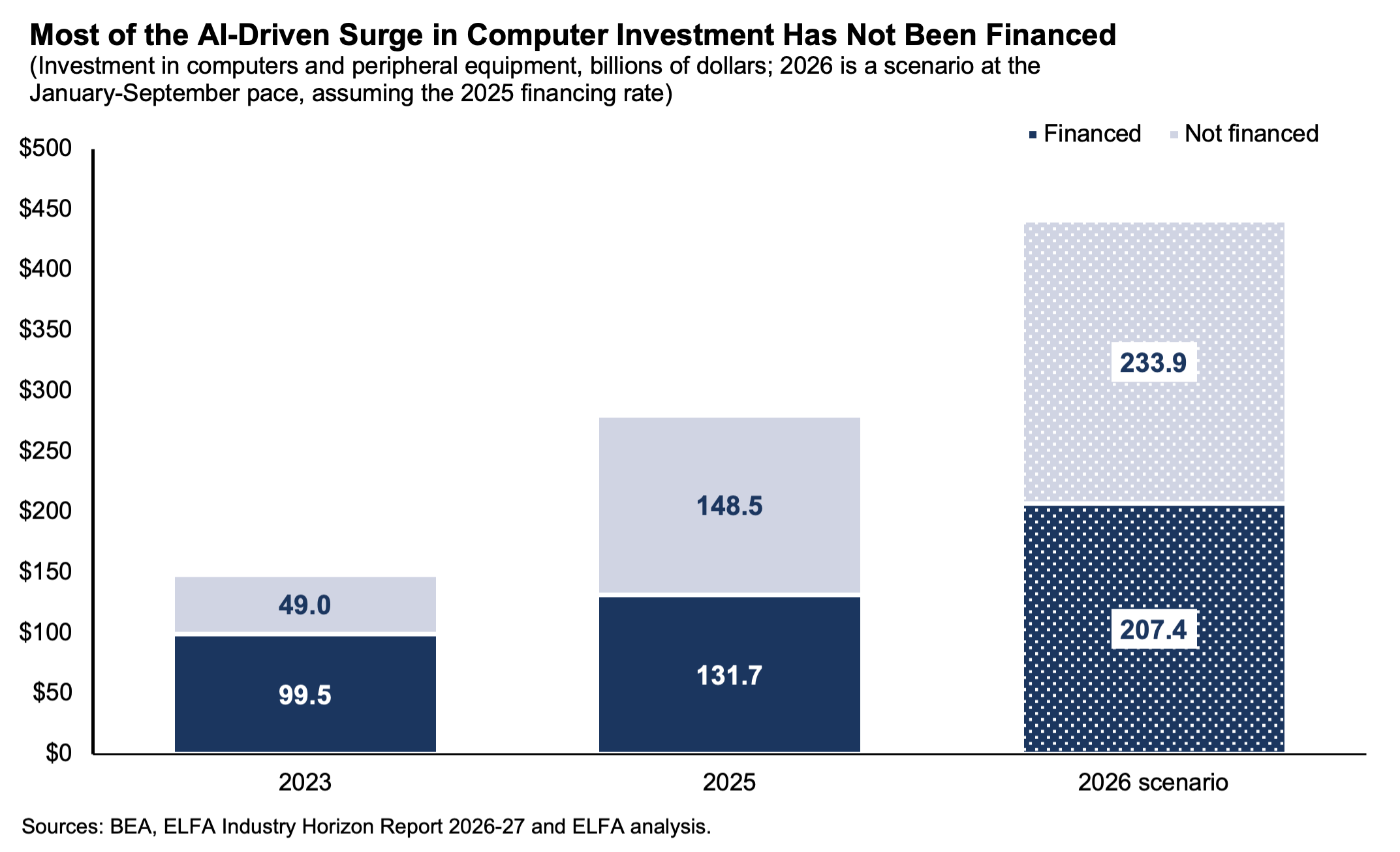
Inflation is proving sticky. We expect core PCE inflation to rise toward 3.5% around the turn of the year and to stay above 3% for most of 2027. Lower oil prices after the election would help, but inflation pressures run broader than energy. AI-exposed categories, such as computers, software and electronics hit by memory-chip costs, account for only about a tenth of core inflation this year. Health care has been a bigger driver, and it barely responds to interest rates. In other words, the impact from rate increases on inflation is likely to be more muted than in past expansions.
Long-term rates still face upward pressure. Yields fell from above 5.3% in October to around 4.8% in the days following the election. However, strong AI-driven investment, sticky inflation, the federal deficit, and investors’ demand for more compensation in an uncertain world put a high floor on longer-term rates, which have since risen back above 5.0%. Uncertainty around changes to the Fed’s business or communication style and threats to Fed independence only increase investor demand for compensation.
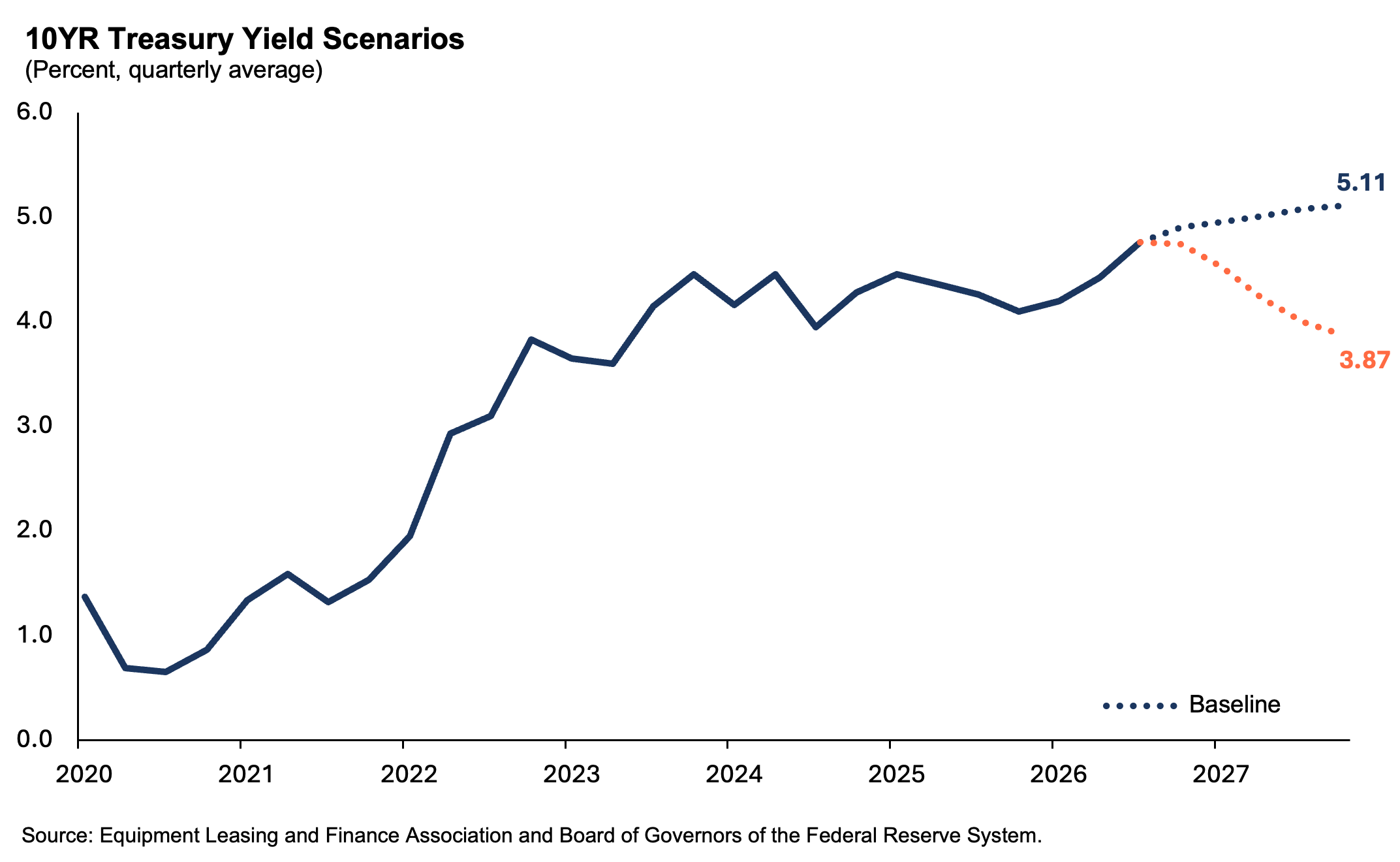
What this means for 2027. In August, the risk was almost exclusively the cost of funds. Now demand risks are rising, albeit modestly. In our AI slowdown scenario, AI-related investment growth slows to a crawl, falling stock prices weigh on consumer spending, and GDP growth slows to about 1.8% by late 2027, with the 10-year yield below 4% as markets price in slower productivity growth and future rate cuts. That is not our baseline, nor is it catastrophic. But it could drain the punch bowl a bit in 2027.


