


We live in a fast-paced world, with continually changing customer expectations, regulatory policies, and industry trends. It’s impossible for anyone to keep up on their own. That’s why having the right data and research on what drives the industry and economy is so important. ELFA and the Foundation have a wealth of data going back decades, with key insights and indicators from trusted sources like the CapEx Finance Index (CFI), Survey of Equipment Finance Activity (SEFA), Monthly Confidence Index for the equipment finance industry (MCI), and U.S. Equipment & Software Momentum Monitor. We know how much our members have come to rely upon those resources. Yet, we also know the data are scattered across thousands of Excel spreadsheets, PDFs, and PowerPoints, often in different formats.
It’s the natural consequence of having research undertaken by two different organizations with two different sets of priorities and processes, and it led us to undertake a holistic review of our research capabilities. The review found that industry research will continue to demand more resources and attention moving forward. It also found that members want the Foundation to focus more on programming that brings emerging leaders into our industry and trains them for the future. As a result, the Foundation took the decision to put workforce development front and center while research programming and production transitioned to ELFA.
We’ve already begun to create an integrated business intelligence ecosystem that can unify historical data, current trends, and future-looking insights into a single, streamlined operation. It’s designed to address the top member asks of producing more real-time industry trends, providing more user-friendly ways to access our data, and developing more actionable resources to make better use of it.
The system encompasses three key components.
Annual Research Agenda
To ensure our focus remains aligned with industry trends and top-of-mind challenges, a joint meeting of the ELFA and Foundation Research Committees will convene each January to discuss how forces shaping the finance and commercial credit landscape could play out in the next 12 months. We’ll use those insights—plus member feedback, key research themes, and industry news insights—to create an annual research agenda that guides our research, data collection, webinars, conferences and speakers for the year ahead.
The inaugural meeting of the joint research committee was held on January 8, 2026.
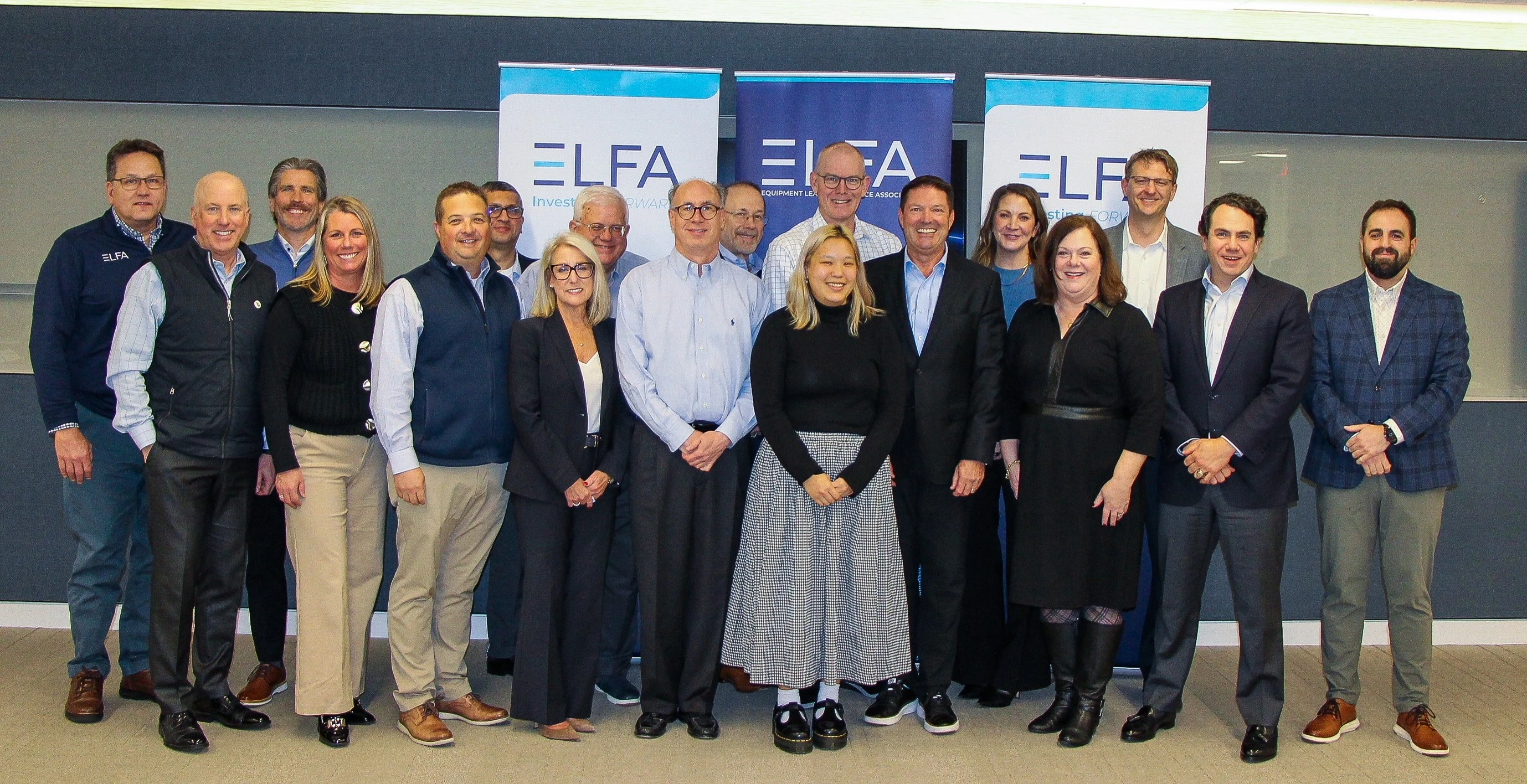
Members of the ELFA and Foundation Research Committees at their January 2026 meeting.
Data-Driven Insights
We’re also in the process of developing a state-of-the-art, AI-enabled data Lakehouse and member portal (a closed network with robust data privacy safeguards that’s fully compliant with even the most stringent requirements under the General Data Protection Regulation (GDPR)). This centralized hub will organize all our existing and future data in such a way as to allow members to more easily access and analyze it. That means the ability to dive deep and ask questions about a variety of different issues across a variety of data sets. It also means being able to view an ELFA-hosted dashboard with frequently queried questions and, over time, gaining the capability to have a dedicated API data stream.
We’re now in the process of evaluating different platforms and programs, and the build will start in earnest in Q1 2026.
Actionable Analysis
We know how much our members value the ELFA and Foundation research reports (e.g., Vertical Outlook series, trending topic updates, and future-looking content that builds on the Economic Outlook and Industry Horizon reports) just as much as our surveys and indices. We also know that their format and delivery could be improved as it’s harder than ever to not only find the time to read a report, but to draw the necessary conclusions from the material on what it all means. We’re working with researchers and stakeholders to make our reports more digestible, actionable, and insightful— supplementing them with tools like project workplans, maturity diagnostics, and discussion questions—with the aim of helping members make the best use of them in their own businesses.
We’ve already begun making these improvements, and over time we plan to build a library of best demonstrated practices that can be used by any organization in any sector.
Conclusion
The research we provide is one of many important ways we help our members navigate a changing world, and we’re now well positioned to bring our capabilities to the next level. As we do so, we want to ensure the products we’re producing reflect their needs and their priorities.


